

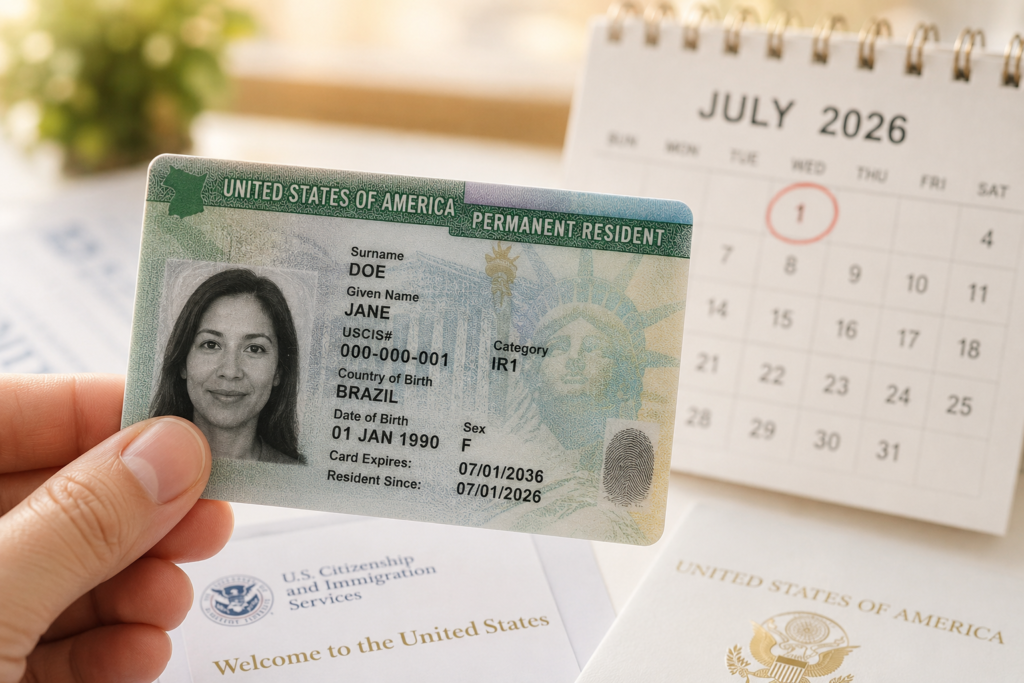
Navigating Your Green Card Journey: Understanding the July 2026 Visa Bulletin
If you’re striving to secure a green card, the monthly U.S. Visa Bulletin is an indispensable tool. It provides updates on when you can advance your application. The July 2026 update from the U.S. Department of State is crucial. It can greatly influence the timeline of your green card process. Whether you are focused on family-sponsored or employment-based immigration, grasping these adjustments in priority dates is essential for advancing your case. The bulletin answers the vital question: Is now the time to move forward? By assessing your priority date against the latest cutoff dates, you can figure out if you’re eligible to file your application, proceed with your Adjustment of Status (Form I-485), or inch closer to finalizing your green card.
Key Changes and How to Interpret the July 2026 Visa Bulletin
The July 2026 Visa Bulletin is not merely a date list; it’s a strategic tool to help you align your immigration plans. For this month, USCIS specifies guidance: family-sponsored applicants should refer to the “Dates for Filing” chart, while employment-based aspirants need to look at the “Final Action Dates” chart. This differentiation is critical as it shows when you can begin the filing process as opposed to when your green card could be approved. Some categories have progressed, yet others, particularly oversubscribed ones, might remain unchanged or even become unavailable due to annual limitations. Progressing your application depends on several factors: your priority date, visa category, and country of origin.
Understanding the Core Components: Priority Date, Chargeability, and Charts
Get to grips with these core elements to effectively navigate the Visa Bulletin. A priority date marks your place in the green card queue. If this date is ahead of the cutoff date for your category, chances are you can proceed. Your country of chargeability, or birth country, impacts expectations as visa allocations are split by country. Nations with high demand can have longer waits. The bulletin includes two main charts: the Dates for Filing, denoting when to submit applications, and the Final Action Dates, showing when green cards can be finalized. Visa availability can vary monthly, whether by advancing, holding steady, or retrogressing if demand tops available numbers.
If you’re applying from within the U.S., the next important step often involves submitting Form I-485 for Adjustment of Status. Your eligibility to file this depends on your priority date and which chart USCIS advises for the month. For July 2026, family-based applicants should use the Dates for Filing, while employment-based applicants should look at the Final Action Dates. If your priority date is earlier than the cutoff or shows as ‘Current’ (C), you likely qualify to proceed. Always verify you meet all filing conditions and consult the latest USCIS guidelines before submission.
Family-Sponsored Preference Categories: What the July 2026 Bulletin Means for You
Family-based immigration processes enable U.S. citizens and Lawful Permanent Residents to sponsor relatives for permanent residency. When using the Visa Bulletin for family categories, first pinpoint your preference category and compare your priority date to the matching cutoff. These categories include: F1 for unmarried sons and daughters of U.S. citizens aged over 21; F2A for spouses and underage unmarried children of green card holders; F2B for unmarried sons and daughters of green card holders over 21; F3 for married offspring of U.S. citizens; and F4 for siblings of U.S. citizens. Each carries distinct cutoff dates affected by country of origin and overall visa availability.
July 2026 Family-Sponsored Priority Date Movement
Analyzing family-sponsored categories in the July 2026 Visa Bulletin, for the F1 category (Unmarried Sons and Daughters of U.S. Citizens 21+), dates moved forward three months to January 1, 2019, in most areas including China and India, but not in Mexico and the Philippines. The F2A category (Spouses and Children of Green Card Holders under 21) remains current (‘C’) universally, indicating eligibility for those with a current priority date. The F2B category (Unmarried Sons and Daughters of Green Card Holders 21+) advanced by 2.5 months to June 8, 2018, though Mexico and the Philippines showed no progress. No change occurred in the F3 category (Married Sons and Daughters of U.S. Citizens), maintaining December 8, 2012, as the date for principal regions. The F4 category (Brothers and Sisters of U.S. Citizens) improved by 2.5 months to March 1, 2010, for most areas, but India, Mexico, and the Philippines showed no changes.
Employment-Based Preference Categories: Navigating the Latest Updates
Employment-based green card classifications depend on individual qualifications and the nature of employment backing. Knowing your precise employment category is crucial when consulting the Visa Bulletin. The main categories include EB-1 (priority workers), EB-2 (professionals with advanced degrees or exceptional prowess), EB-3 (skilled workers, professionals, and other workers), EB-4 (special immigrants), and EB-5 (immigrant investors). Visa availability and processing times vary by category, country of origin, and annual limits—categories with higher demand usually face longer waits. This section covers employment-based cutoff dates for July 2026.
July 2026 Employment-Based Priority Date Movements
Examining the July 2026 Visa Bulletin, employment-based categories show mixed trends. The EB-1 category (Extraordinary Ability, Outstanding Professors/Researchers, Multinational Executives) is current (‘C’) for most regions, though China gained two months, moving to June 1, 2023, and India’s EB-1 retrogressed by two months to October 15, 2022. For EB-2 (Advanced Degrees or Exceptional Ability), while most regions are current, India’s EB-2 is listed as unavailable (‘U’). In the EB-3 Skilled Worker category, most regions advanced by two months to August 1, 2024; China went forward by 4.5 months to December 21, 2021, and India moved by 15 days to January 1, 2014. The EB-3 Other Worker category improved by one month for most areas to March 1, 2022, with India gaining 15 days to January 1, 2014. All regions saw a two-month advancement in the EB-4 category (Special Immigrants) to September 15, 2022. Lastly, the EB-5 category (Immigrant Investors) is current for most, except China, which moved to December 1, 2016, while India’s EB-5 is unavailable (‘U’).
Staying current with these updates is vital, as even small changes in cutoff dates can significantly affect eligibility and your green card application’s pace. Understanding these shifts lets you know precisely when your priority date is current, allows for timely Form I-485 filing, ensures accurate use of filing charts, and enables preparation of necessary documentation before the filing period opens. This diligence can simplify the path to permanent residency.
Why Consistently Tracking the Visa Bulletin is Essential
The U.S. Visa Bulletin is updated monthly and these changes can deeply impact your path to filing or advancing in the green card process. Diligently monitoring these updates isn’t just wise; it’s crucial for anyone pursuing permanent residency. When cutoff dates progress, it potentially means more applicants can advance, thus reducing wait times. However, if they remain static or move back (retrogress), it signals increased demand exceeding available visas, demanding patience.
Regularly reviewing these modifications allows you to accurately determine when your priority date becomes current. This awareness permits you to file Form I-485 precisely when eligible, avoiding delays or early filing pitfalls. Additionally, it ensures you are working with the correct filing chart as directed by USCIS for the month. Preparedness is essential in immigration tasks; following the bulletin ensures you are ready with documents and supplementary evidence, facilitating form completion once the window for filing opens. This foresight can greatly ease your path to becoming a green card holder. For those seeking broader insights into U.S. immigration policy and economics, the World Bank’s migration data can offer additional perspectives.
Additional Resources and Next Steps in Your Immigration Journey
Securing a green card involves navigating a complex web of forms and criteria. Understanding the Visa Bulletin is critical, but it represents just one part of the broader immigration process. If your priority date is current and you satisfy all criteria, you’re well-positioned to advance your green card application. For comprehensive insights on immigration services and specific visa types, exploring resources about various application protocols can be beneficial. For instance, examining visa services such as those from Mariana Consultancy can guide you in choosing the best path for your situation.
The U.S. government offers extensive details on immigration, including guidance on forms and procedures. Agencies like the Department of State, which releases the Visa Bulletin, and the U.S. Citizenship and Immigration Services (USCIS), which processes most green card applications, provide invaluable resources. Understanding visa availability, guided by international agreements and numerical limits, can offer additional clarity. Information can often be accessed through government sites or reputable analysis sources. For instance, reviewing international practices in immigration on sites like ISO.org can yield insights into global movement and documentation standards.
The July 2026 Visa Bulletin represents an important milestone for many aspiring green card recipients. Whether dates have moved forward, stayed stable, or retrogressed, knowledge is crucial. By understanding your category, priority date, and relevant charts, you can navigate this stage of your immigration process confidently. Regularly keeping track of updates is vital, as is having all documentation prepared to seize the chance when your date becomes current. Staying informed helps manage expectations and strategizes your approach toward achieving permanent residency in the U.S.
Frequently Asked Questions
What is a priority date and why is it important for my green card application?
Your priority date is the official date when your application for an immigrant visa was filed or registered with the U.S. government. It essentially marks your place in line. When your priority date becomes ‘current’ according to the Visa Bulletin, it means you can move forward with the next steps in your green card process, such as filing Form I-485 for Adjustment of Status.
How do the ‘Dates for Filing’ and ‘Final Action Dates’ charts in the Visa Bulletin affect my application?
The ‘Dates for Filing’ chart indicates when you can submit your application (like Form I-485) if you are inside the U.S. The ‘Final Action Dates’ chart determines when your green card can actually be approved. For July 2026, family-sponsored applicants use the Dates for Filing, while employment-based applicants use the Final Action Dates.
What does it mean if a visa category ‘retrogressed’ in the July 2026 Visa Bulletin?
A ‘retrogression’ means that the cutoff dates for a particular visa category have moved backward. This typically happens when demand for visas in that category exceeds the number of available visas for the fiscal year. If your priority date was current and the date retrogressed, you may need to wait longer before you can proceed.
How does my country of birth impact my green card processing time based on the Visa Bulletin?
Your country of birth, known as the ‘country of chargeability,’ significantly affects your wait time. High-demand countries like India, China, Mexico, and the Philippines often have longer processing times because there are per-country limits on immigrant visas. The Visa Bulletin’s charts will show different cutoff dates based on your country of chargeability.
Can I still apply for a green card if my priority date is not yet current based on the July 2026 Visa Bulletin?
Yes, you can still pursue your green card application even if your priority date is not yet current. However, you will need to wait until the Visa Bulletin shows that your priority date is either earlier than or the same as the cutoff date for your category and country. Continuously monitoring the monthly Visa Bulletin is crucial for knowing when your date becomes current.